
Guides11 min
Castor Oil Bristles vs Nylon: Are They Actually Different?
Castor oil toothbrush bristles are a type of nylon — bio-based, but nylon. How they compare to petroleum nylon and to genuinely plastic-free bristles.
Read article →7 Aug 2026

Castor oil toothbrush bristles are a type of nylon — bio-based, but nylon. How they compare to petroleum nylon and to genuinely plastic-free bristles.
Castor oil bristles last about as long as any nylon — roughly three months, or when they splay. The wear science, and what worn bristles shed.
No electric toothbrush is genuinely plastic-free — the bristles are always a polymer, even plant-based ones. What the sustainable brands do and don't fix.
Two natural-bristle brushes, same handle and pressure-fitted head. The bristles differ in one measurement — thickness — and that decides which suits your gums.

Forever chemicals is a nickname, not a chemical name. Who coined it, what forever really means for the planet and for your blood, and where you meet them.

Eso World is a shop, not a courier. This page covers our own order delivery: dispatch times, UK and international rates, tracking, and lost-parcel steps.

Red, amber, clear: the tint is the mechanism, not the styling. What the transmittance numbers show, what the sleep trials support, and where the case thins.

Sodium laureth sulfate is not SLS, and it is not an endocrine disruptor. The real story is 1,4-dioxane — a byproduct of the step that makes SLES milder.
Natural hair holds water and nylon does not. The one controlled test of bacteria on pig bristle found no difference. Both facts belong in the same answer.
Horsehair is the finest natural bristle at 50-80 microns. That helps sensitive gums. It also raises real questions about moisture, sourcing and allergy.
Two to three months — but that interval is a hygiene convention, not a measured cleaning cliff. What wear, handle darkening and composting actually look like.
Bamboo is the handle, boar is the bristle — they are not alternatives. The real choice is what the bristles are made of and what holds them in.

Xenoestrogens are the oestrogen-mimicking subset of endocrine disruptors. What makes a molecule fit the receptor, where they occur, and where the evidence stops.

A sorted list of the endocrine disruptors you actually meet: where each turns up, and how strong the evidence is — strong, moderate and contested kept apart.

Glyphosate turns up in oats, pulses, bread and rivers — and in most people's urine. Where it comes from, and which avoidance steps actually do anything.
Foam, PVC, silicone — what actually sits in your ear canal for eight hours, which materials are inert, and what 'non-toxic' can honestly mean here.

A UK-only answer: what the DWI actually tests, what carries no legal limit here (PFAS, microplastics), and where lead pipes and hardness still bite.

BPA replaced by BPS, BPF and BPAF — three near-identical molecules that took three different jobs. What each one is, where it turns up, how to spot it.
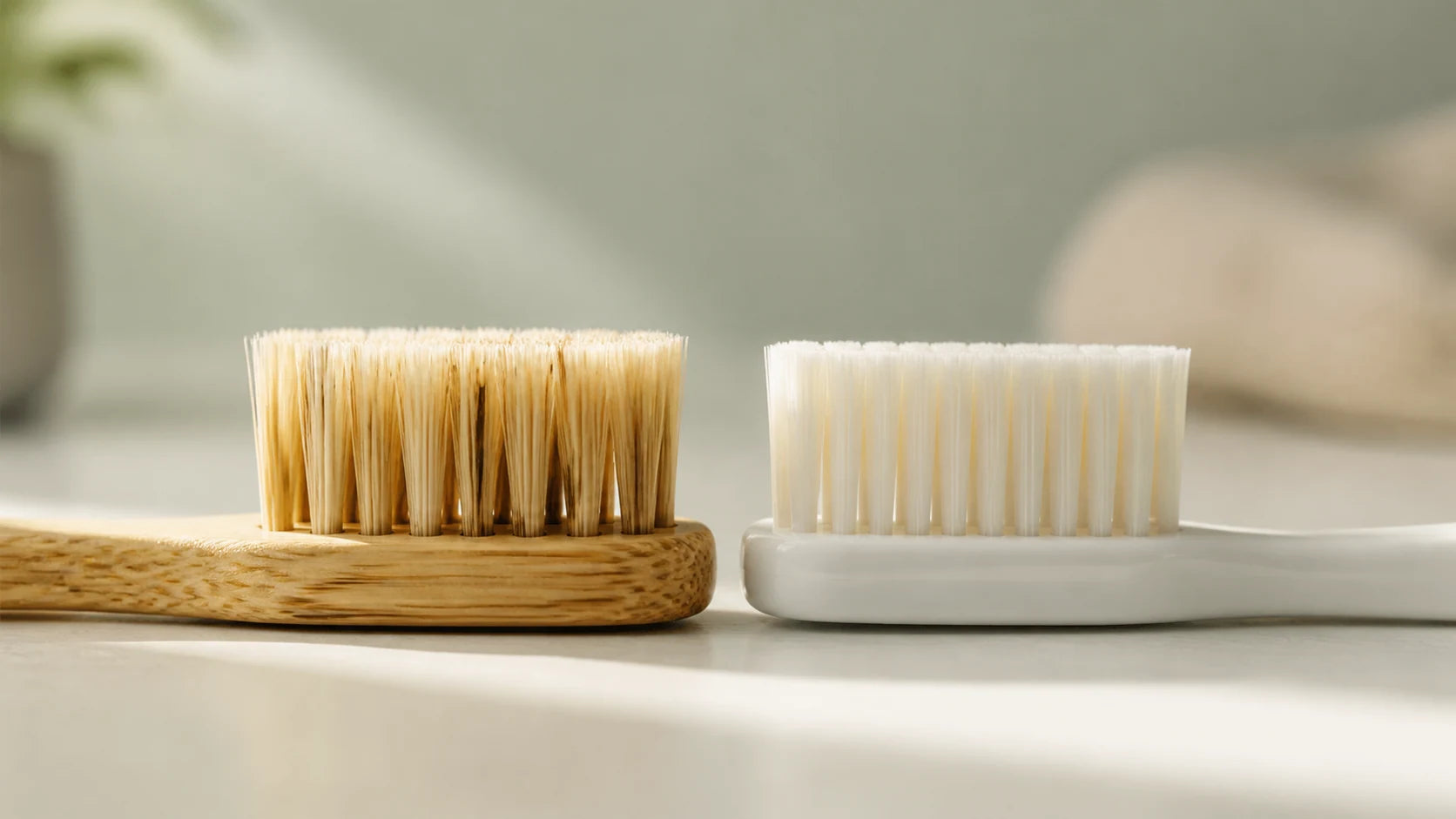
Boar bristle vs nylon toothbrushes compared on plaque, gums, bacteria, plastic shedding, care and the limits of the available evidence.
Stay current
New research, when we find it.
One email when we find something worth reading. No schedule, no filler.
Every product page shows you exactly what's in it.
Full material breakdowns. What we left out, and why.
Browse products