Skip to content
Eso World

An extra-soft-feeling natural-bristle option with a bamboo handle and pressure-fit construction. Every material is disclosed; clinical superiority over nylon is not claimed.. A soft-feeling natural bristle with every material disclosed.. Made from Moso Bamboo, Horsehair Bristles, Pressure Fit. Free from Nylon-6 bristles, Epoxy resin (BADGE), Polyurethane glue, Hot-melt adhesive (EVA / PUR / SIS), Handle coatings (lacquer / wax). Dental guidance generally recommends soft bristles and gentle pressure. This horsehair brush is offered for readers who prefer a soft-feeling natural fibre and disclosed, pressure-fit construction. 48 verified customer reviews, 4.9/5 average. $27.60.

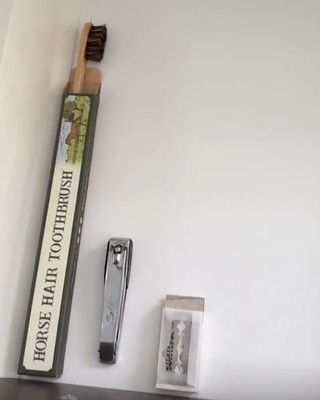
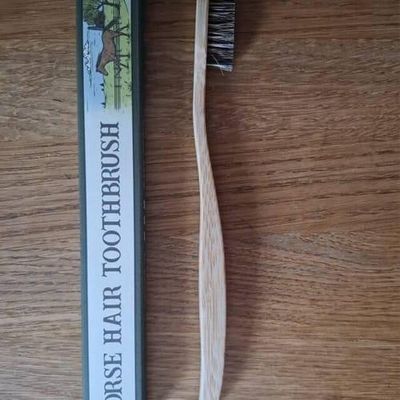
Horsehair Toothbrush

An extra-soft-feeling natural-bristle option with a bamboo handle and pressure-fit construction. Every material is disclosed; clinical superiority over nylon is not claimed.

Build your order

tap a brush to add or remove

6brushes in basket
$4.60each
6 brushes$27.60 today~18 months supply

Have it arrive every months

$27.60 every 2 months · $13.80/month
pause, skip, or cancel anytime

30-day returnsPlastic-free packaging
Ships within 24 hours30-day returns
Human replies in 24 hoursPlastic-free packagingSecure checkout

Horsehair Toothbrush × 6

$27.60

The best toothbrushes I've ever had. ♡ Relatively fast shipping to Germany. If there is a problem with shipping, the seller responds quickly and everything is resolved promptly. Would gladly order again! :)Meerlancholie

Extra-soft-feeling natural bristlesNatural hair with a finer feel than the boar-bristle model; no product-specific gum outcome is claimedNo equivalence claim

Best for:

  • People who prefer a softer-feeling natural fibre; seek dental advice for sensitivity, recession or post-treatment care
  • You tried the boar bristle and found it too firm
  • You want the same adhesive-free construction with a gentler feel
Handle

Moso bamboo (Phyllostachys edulis), uncoated

Bristles

Natural horsehair

Attachment

Pressure-fitted — zero adhesive

Bristle feel

Extra soft-feeling (not independently mapped to a nylon firmness standard)

Bristles

Natural horsehair (tail hair)

Length

19cm

Weight

~12g

End of life

Bamboo and keratin components; check local composting rules. Finished-brush degradation has not been independently measured.

What's In It

Every material, listed.

The Horsehair Toothbrush is made from Moso Bamboo, Horsehair Bristles and Pressure Fit.

~95%

Moso Bamboo

Handle (Phyllostachys edulis)

Moso bamboo handle, supplied without polyurethane lacquer, paraffin wax or another listed sealant. The handle can darken with repeated wetting. Rinse after use and let it dry upright. No independent finished-product study establishes an antimicrobial effect or a fixed degradation time for this handle.

~5%

Horsehair Bristles

Bristles (natural hair)

Natural hair bristles made primarily from keratin. They generally feel finer and softer than the boar-bristle model, but the finished brush has not been independently mapped to a nylon firmness standard or tested for clinical outcomes. If you have inflamed or receding gums, ask your dental professional which brush is appropriate.

Pressure Fit

Attachment method

Each tuft is mechanically compressed into a drilled bamboo hole. No synthetic adhesive is listed in this product's construction. That is a disclosed design choice, not evidence that other attachment methods leach substances or cause harm.

Dental guidance generally recommends soft bristles and gentle pressure. This horsehair brush is offered for readers who prefer a soft-feeling natural fibre and disclosed, pressure-fit construction. We have not established that it cleans as well as nylon or produces better gum outcomes; those claims would require finished-product clinical testing.

How We Compare

Eso World vs. the alternatives.

 Eso WorldOther EcoConventional
Bristle materialNatural horsehair (keratin, tapered tip)Nylon-6 (synthetic, flat-cut cross-section)Nylon-6 or nylon-612
Bristle feelExtra-soft-feeling natural hair; not independently standardisedVaries by productAvailable in multiple rated firmness levels
Bristle adhesiveNone — pressure-fittedEpoxy resin or polyurethane (rarely disclosed)Metal staple + hot-melt adhesive
Microplastic statusKeratin, not microplastic; total shedding not independently measuredCheck product disclosureUsually nylon or another polymer
Handle coatingNone — raw bambooPolyurethane lacquer or paraffin waxN/A (plastic)
Bristle typeNatural hair fibrePetroleum-derived polymerPetroleum-derived
End-of-life evidenceBamboo + keratin; no fixed finished-product degradation testVaries by bristle and attachmentCheck local waste guidance
Pricefrom $3.91/ea£5–£8£2–£4

Based on a review of bamboo toothbrush brands sold in the UK, 2024–25. ‘Other bamboo’ = typical ‘eco’ bamboo brush with nylon bristles and adhesive. ‘Conventional’ = standard supermarket plastic toothbrush.

Comparison summary: Bristle material: Eso World uses Natural horsehair (keratin, tapered tip), other eco use Nylon-6 (synthetic, flat-cut cross-section). Bristle feel: Eso World uses Extra-soft-feeling natural hair; not independently standardised, other eco use Varies by product. Bristle adhesive: Eso World uses None — pressure-fitted, other eco use Epoxy resin or polyurethane (rarely disclosed). Microplastic status: Eso World uses Keratin, not microplastic; total shedding not independently measured, other eco use Check product disclosure. Handle coating: Eso World uses None — raw bamboo, other eco use Polyurethane lacquer or paraffin wax. Bristle type: Eso World uses Natural hair fibre, other eco use Petroleum-derived polymer. End-of-life evidence: Eso World uses Bamboo + keratin; no fixed finished-product degradation test, other eco use Varies by bristle and attachment. Price: Eso World uses from $3.91/ea, other eco use £5–£8.

What We Left Out

What we don't use.

The Horsehair Toothbrush is free from Nylon-6 bristles, Epoxy resin (BADGE), Polyurethane glue and Hot-melt adhesive (EVA / PUR / SIS) and 3 other substances. Each exclusion is explained below with the reason.

Nylon-6 bristles

This product uses horsehair rather than nylon. Bio-based or castor-oil-derived nylon is still a polyamide. A 2025 simulation measured microplastic release from tested polymer-bristled brushes, but did not establish swallowed dose or harm (DOI: 10.1016/j.microc.2025.114680).

Epoxy resin (BADGE)

The most common bristle adhesive in bamboo toothbrushes. Even brands that claim ‘chemical-free’ or ‘no harmful chemicals’ almost never disclose what’s holding the bristles in — because the answer is epoxy resin. Contains bisphenol A diglycidyl ether. Olea et al. (1996) demonstrated leaching in warm, moist, slightly acidic conditions.

Polyurethane glue

This product's construction lists no polyurethane adhesive. Competitor formulas and cured-product exposure vary; absence here is a material fact, not a claim that another finished brush is unsafe.

Hot-melt adhesive (EVA / PUR / SIS)

Three different polymer chemistries — ethylene-vinyl acetate, reactive polyurethane, styrene-isoprene-styrene. All petroleum-derived. All used in mass-produced bamboo brushes. None tested for chronic oral mucosal exposure. All eliminated by our mechanical pressure-fit.

Handle coatings (lacquer / wax)

This handle is supplied uncoated. Competing products vary, so check each product's disclosed finish rather than assuming a coating or its chemistry.

BPA / BPS / BPF

No plastic anywhere in this toothbrush. BPA substitutes (BPS, BPF) bind to the same oestrogen receptors via a non-genomic pathway that standard regulatory tests don’t assess (Rochester & Bolden, 2015). A product marketed as ‘BPA-free’ may still contain endocrine-active bisphenol derivatives.

Fragrances or flavour coatings

No mint spray, no freshness coating, no ‘natural flavour’ (typically a synthetic blend behind a regulatory loophole). Unscented.

Verified Reviews

4.9

48 verified reviews

5 out of 5 stars

Surprisingly good. A few bristles fell out early on which was a bit worrying, but it settled down after a couple of days. Two of us have now been using the same brush twice a day for three weeks and it's still going strong. Getting a bit spikey, so might be time for a new one roughly one person month, but that's better than I was expecting, and not badly priced

M

Mark C.

Verified buyer

5 out of 5 stars

I’ve for a long time owned an electric tooth brush yet hated it i’m trying to go plastic free with all stuff I purchase & this tooth brush is 100% all natural right the way down to the bristle’s & is softer on my gums you don’t need electricity to use it it’s all natural & that’s what I luv the most

Review by Sign i.
S

Sign i.

Verified buyer

4 out of 5 stars

Softest natural bristle(horse) so far I've found, def softer than boar hair and another brand of horse hair I've tried and will reorder this however if expecting this to be as soft as a nylon 'soft/ultra soft' toothbrush then it isnt... but I believe this is just how it is with natural.

E

Eddie W.

Verified buyer

5
94%
4
2%
3
4%
2
0%
1
0%
How to Use

Getting started.

1

Clear loose fibres first

Run bristles under warm water against your palm for 10 seconds before your first brush. Horsehair is finer than boar — a few loose strands on first use is normal. Settles after 1–2 uses.

2

Use gentle technique

Hold the brush at about a 45° angle to the gumline and use short, gentle strokes. Do not compensate for a different bristle feel by pressing harder. Follow personalised advice from your dental professional.

3

Tilt vertical for the inner front teeth

Behind the upper and lower front teeth, tilt the brush vertically and use short up-and-down strokes. Same Bass principle, different angle. Most people skip this spot — it’s also where tartar accumulates fastest.

4

Stand upright to dry

Rinse thoroughly and let the brush air dry upright. Do not leave it in pooled water or a sealed wet case.

5

Check local end-of-life rules

Separate the hair tufts from the bamboo where practical. Home and council composting acceptance varies; the finished brush has no independently verified degradation time.

What to Expect

The first 8–12 weeks.

1

Noticeably softer

If you’re coming from nylon or even boar, horsehair feels very soft. That’s normal — equine tail hair is finer than hog hair. You may find a few loose strands on first use. Run under warm water against your palm to clear them — settles after one or two brushes. The handle feels warm, not cold.

2–4

You stop noticing

The bristles may begin to shape to your brushing angle. Keep pressure gentle. Bleeding, pain or worsening sensitivity needs dental advice rather than a product claim or self-diagnosis.

4–8

Peak performance

Bristles broken in. Consistent cleaning with minimal tissue disruption. Handle has darkened a shade — cosmetic only. If you subscribed, your replacement is on its way.

8–12

Time to replace

When bristles are visibly worn or splayed, replace the brush. Separate materials where practical and follow local waste or composting rules; no fixed finished-product degradation time has been verified.

Questions & Answers

17 questions answered.

Dental guidance generally recommends soft bristles and gentle pressure, but the right brush depends on your mouth and technique. This horsehair option feels soft and uses no synthetic adhesive; it has not been clinically shown to be gentler or more effective than a soft nylon brush. Ask your dentist if you have active gum disease, recession or pain.

Horsehair generally feels finer and softer; boar generally feels firmer. Both use a bamboo handle and pressure-fit construction. There is not enough direct comparative clinical evidence to claim equal plaque removal or better gum outcomes. Choose by comfort and your dental professional's recommendation.

The Bass technique — what every dentist actually recommends. Hold the brush at a 45° angle to your gumline, not flat across the teeth. Short, gentle, vibrating strokes — like polishing, not scrubbing. Behind the front teeth, tilt vertical. Two minutes total. Horsehair is finer than nylon ‘soft’, so the hard back-and-forth motion you used on a plastic brush will feel like nothing’s happening. It is — the bristle flexes into the gum margin instead of scraping across it. Bass (1954) established this 70 years ago; Jain et al. (2019) confirmed it: soft bristles plus correct technique cleans the same as harder bristles, with significantly less tissue damage.

A 2025 simulation measured microplastics released by the commercial polymer-bristled brushes it tested. It did not establish swallowed dose or a clinical health effect. Horsehair is keratin rather than plastic, so shed hair is not microplastic; the finished brush has not been independently tested for total particle shedding.

No. Horsehair is an animal product. A plant-based bristle that’s biodegradable, effective, and not a synthetic polymer doesn’t exist yet. If one emerges, we’ll switch.

Natural bristles can provide mechanical brushing, but we cannot claim they are equivalent or superior to nylon. The direct human comparisons we located were small and favoured or tended toward nylon under their test conditions. Product design, pressure and technique matter, and current dental guidance generally recommends soft bristles.

Each tuft is mechanically compressed into a drilled bamboo hole rather than attached with a listed synthetic adhesive. We disclose that construction; we do not claim its retention is superior to every adhesive design without a published comparative test.

A toothbrush is used inside the mouth, so material disclosure is useful. But contact does not prove that a substance leaches, is absorbed or causes harm. Each step needs product-specific migration, exposure and toxicology evidence; this page does not treat one as proof of the next.

Most bamboo toothbrushes contain: nylon-6 bristles (a synthetic polymer), epoxy resin or polyurethane adhesive (petroleum-derived, contains bisphenol derivatives), and polyurethane lacquer or paraffin wax on the handle. These materials are almost never disclosed. The safety data sheets for these adhesives evaluate skin contact — not chronic oral mucosal exposure. The Eso World Horsehair Toothbrush eliminates all six adhesive chemistries and uses only bamboo, horsehair keratin, and mechanical compression.

Replace it when the bristles become visibly worn or splayed, and follow your dental professional's advice. Separate the tufts from the bamboo where practical, then use local waste or composting guidance; acceptance varies.

The main materials are bamboo and keratin, but local compost facilities may not accept a used toothbrush and degradation varies with conditions. Separate the tufts where practical and follow local rules. We have not independently verified a fixed composting time for the finished brush.

Any repeatedly wet brush can be poorly stored. Rinse it, shake off excess water and let it dry upright in open air. Darkening alone is not proof of mould, but persistent odour, softness or visible growth means the brush should be replaced. We do not claim the finished handle is antimicrobial.

The material specification lists no lacquer, paraffin wax or other handle coating. An uncoated handle may darken and needs to dry between uses. This is a materials choice, not a claim that every coating is unsafe.

Sometimes a few. Horsehair tapers naturally — finer than boar, with slight variation in thickness. Nylon is machine-extruded, perfectly uniform. Run bristles under warm water against your palm before first use. Settles after one or two brushes.

We make a kids version with a smaller head and shorter handle — same pressure-fitted construction, boar bristles, zero adhesive. Ages 3+. See the Kid’s Boar Bristle Toothbrush.

Whatever your dentist recommends. Keratin is chemically inert — horsehair won’t react with any toothpaste formulation. Fluoride, non-fluoride, charcoal, whatever. The bristle material doesn’t interact with the paste.

Roughly the same as a mid-range Oral-B. Less than most ‘eco’ bamboo brands that still use nylon and glue. Current price is on the page above, and the bundle tiers take up to ~61% off the per-unit price.

The bottom line

The Horsehair Toothbrush is made from Moso Bamboo, Horsehair Bristles, Pressure Fit. Free from Nylon-6 bristles, Epoxy resin (BADGE), Polyurethane glue. Every material is published on this page with the research behind each choice. 48 verified buyers rate it 4.9/5.

Shipping calculated at checkout
30-day returns
Every material published

Jain T, Pundir S, Garg R (2019)

Journal of Conservative Dentistry

A soft-versus-medium bristle study informs general brushing pressure and stiffness choices. It did not test this horsehair product and cannot establish a product-specific plaque or gum outcome.

Bass CC (1954)

Journal of the Louisiana State Medical Society

An early description of a gentle gumline brushing technique. Current individual advice should come from a dental professional; this source does not establish superiority for horsehair.

Aytulun E, et al. (2025)

Microchemical Journal

A simulated-brushing study measured microplastic release from every commercial polymer-bristled brush tested. It did not measure swallowed dose, clinical harm or natural-hair brushes. DOI: 10.1016/j.microc.2025.114680.

Zinn MK, et al. (2020)

Microorganisms

A laboratory comparison found no significant bristle-material effect on bacterial survival or growth among the materials tested, including pig bristle and nylon. It did not test this finished horsehair product. DOI: 10.3390/microorganisms8091379.

Shojaei AH (1998)

Journal of Pharmacy & Pharmaceutical Sciences

A general review of buccal drug delivery explains that permeability varies by molecule and oral region. It does not show migration, absorption or harm from a finished toothbrush.

Afrin T, Tsuzuki T, Kanwar RK, Wang X (2012)

Journal of Textile Science & Engineering

This textile/material study is not a finished toothbrush-handle hygiene trial. It cannot establish that this handle prevents bacterial or fungal growth in use.

Olea N, Pulgar R, Pérez P, et al. (1996)

Environmental Health Perspectives

Bisphenol-A leaches from dental sealants and composite resins into saliva within hours of application. Warmth, moisture, and mild acidity — the exact conditions during brushing — accelerate leaching from polymer-based materials. The oral environment is not inert. Relevant because epoxy resin bristle adhesives contain bisphenol derivatives.

Rochester JR, Bolden AL (2015)

Environmental Health Perspectives

BPA substitutes BPS and BPF match the body’s own oestrogen at membrane receptors via a non-genomic pathway that regulatory testing doesn’t assess. The ‘BPA-free’ label solved a consumer perception problem, not a biological one. Relevant because epoxy resin adhesives in competitor brushes can contain bisphenol derivatives.

Read our research →

This is a toothbrush, not a medical device. Brush twice daily and see your dentist regularly.