Skip to content
Eso World

Copper kills bacteria on contact — that’s why hospitals use it on door handles. Your tongue scraper uses the same mechanism, 10 seconds a day.. Solid copper, single piece, no plating. Every material on the page.. Made from Copper. Free from Nickel plating, Chrome plating, Plastic grips, Soldered joints, Lacquer coating. Tongue scraping removes volatile sulphur compounds — the bacterial byproducts that cause bad breath. Brushing alone misses them because they live in the biofilm coating your tongue, not on your teeth. 21 verified customer reviews, 5/5 average. $9.00 — ships internationally from the UK.

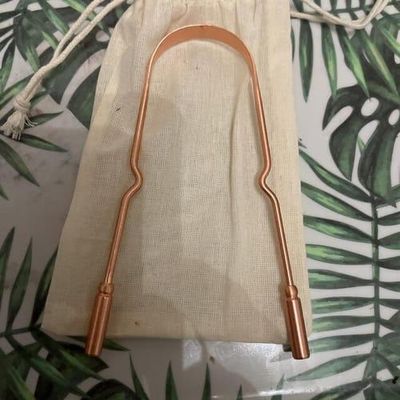
Copper tongue scraper with a U-shaped cleaning edge resting on a natural cotton drawstring pouch in grass
Close-up of the curved copper scraping edge of the tongue scraper laid on a cotton pouch
Close-up of a rounded copper handle grip on the tongue scraper, resting on a cotton pouch
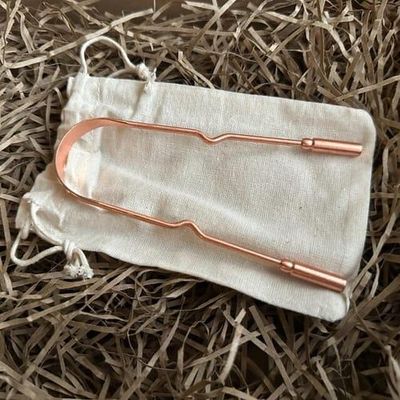
The two rounded copper handle grips of the tongue scraper resting on a cotton drawstring pouch in grass
Natural cotton drawstring storage pouch for the copper tongue scraper standing upright in grass
Full U-shaped copper tongue scraper laid diagonally across its cotton drawstring pouch in grass

Copper Tongue Scraper

Copper kills bacteria on contact — that’s why hospitals use it on door handles. Your tongue scraper uses the same mechanism, 10 seconds a day.

$9.00

Choose your pack

Choose pack size
30-day returnsPlastic-free packaging
Ships within 24 hours30-day returns
Human replies in 24 hoursPlastic-free packagingSecure checkout

Copper Tongue Scraper

$9.00

Great quality, nicely packaged. Surprisingly heavier than expected - I had one from Amazon for a few years and it doesn’...Tommy

100% pure copperAntimicrobialOne solid piece

Best for:

  • Want to add tongue cleaning to your routine
  • Tired of plastic tongue scrapers that crack after a month
  • Already use our toothbrush and want to complete the set
Material

100% pure copper

Construction

Single piece, no joints

Coating

None — raw copper

Lifespan

Years (buy-once)

What's In It

Every material, listed.

The Copper Tongue Scraper is made from Copper.

100%

Copper

Body (Cu, atomic number 29)

Pure copper, formed from a single piece with no joints, welds, or solder. Copper is one of the few metals with intrinsic antimicrobial properties — copper ions (Cu²⁺) disrupt bacterial cell membranes on contact, generate reactive oxygen species, and damage microbial DNA. This mechanism, called ‘contact killing’, was demonstrated by Grass et al. (2011) and is the reason hospitals install copper door handles, bed rails, and touch surfaces to reduce MRSA and C. difficile transmission. The same property works on the bacterial biofilm coating your tongue. Unlike chemical antimicrobials, bacteria cannot develop resistance to copper’s physical mechanism. The scraper is uncoated — no lacquer, no sealant — so the raw copper surface is always active. It develops a natural patina over time; this is cosmetic oxidation and does not reduce effectiveness.

Tongue scraping removes volatile sulphur compounds — the bacterial byproducts that cause bad breath. Brushing alone misses them because they live in the biofilm coating your tongue, not on your teeth. Copper does this better than steel because copper ions disrupt bacterial cell membranes on contact (Grass et al., 2011). It’s the same property that led hospitals to install copper door handles to reduce MRSA transmission. Your tongue scraper uses it for 10 seconds a day.

What We Left Out

What we don't use.

The Copper Tongue Scraper is free from Nickel plating, Chrome plating, Plastic grips and Soldered joints and 1 other substances. Each exclusion is explained below with the reason.

Nickel plating

Common on cheap scrapers. Nickel is the most common contact allergen in the EU — responsible for 15–20% of contact dermatitis cases (Thyssen & Menné, 2010). Putting nickel-plated metal on your tongue daily is a sensitisation risk. Ours is pure copper, nothing else.

Chrome plating

Decorative chrome plating involves hexavalent chromium (Cr VI) during manufacturing — a known human carcinogen (IARC Group 1). The finished plating is trivalent chromium, but scratches or wear can expose underlayers. Unnecessary on copper, which is already antimicrobial.

Plastic grips

Some scrapers add TPE rubber or polypropylene grips for ‘comfort’. These harbour bacteria in crevices, can’t be sterilised, and add petrochemical materials to a product that goes in your mouth. This is one solid piece of copper — no joints, no crevices, nothing to trap bacteria.

Soldered joints

Some copper scrapers are made from copper sheet soldered or welded together. Solder typically contains tin-lead or tin-silver alloys. Our scraper is a single formed piece — no solder, no joints, no secondary metals.

Lacquer coating

Some copper products are lacquered to prevent tarnishing. The lacquer is typically polyurethane or nitrocellulose — synthetic coatings that seal in copper’s antimicrobial properties and add a petroleum-derived film. We leave the copper raw so the antimicrobial action works.

Verified Reviews

5.0

21 verified reviews

5 out of 5 stars

Great quality, nicely packaged. Surprisingly heavier than expected - I had one from Amazon for a few years and it doesn’t compare to this ESO one! Vincent reach out shortly after my order arrived to check everything was in order. Would recommend!

Review by Tommy
T

Tommy

Verified buyer

5 out of 5 stars

Best purchase ever! Great service and love the quality of the product - especially given copper has health benefits too. More effective than any other product I have tried and has now become a big essential in my daily routine.

Z

Zana R.

Verified buyer

5 out of 5 stars

A beautifully made copper tongue scraper, promptly delivered, at a good price. A way of getting copper into your body too.

J

Jeanette A.

Verified buyer

5
100%
4
0%
3
0%
2
0%
1
0%
How We Compare

This scraper vs. typical cheap scrapers.

 This scraperTypical cheap scrapers
Material100% pure copperPlastic or plated metal
AntimicrobialYesNo
Plating or coatingNone — raw copperOften chrome or nickel plated
DurabilityLasts yearsPlastic cracks, plating flakes
Plastic-freeYesUsually plastic handle or packaging

Comparison summary: Material: This scraper uses 100% pure copper, typical cheap scrapers use Plastic or plated metal. Antimicrobial: This scraper uses yes, typical cheap scrapers use no. Plating or coating: This scraper uses None — raw copper, typical cheap scrapers use Often chrome or nickel plated. Durability: This scraper uses Lasts years, typical cheap scrapers use Plastic cracks, plating flakes. Plastic-free: This scraper uses yes, typical cheap scrapers use Usually plastic handle or packaging.

How to Use

Getting started.

1

Stick your tongue out

As far as comfortable. You want to reach the back — that's where most bacteria live.

2

Place the scraper at the back

Hold both ends. Press the curved edge gently against the back of your tongue.

3

Pull forward 5–10 times

Gentle, even pressure. You'll see a whitish coating on the scraper — that's the bacterial biofilm.

4

Rinse and dry

Rinse the scraper under running water after each pull. Pat dry when done. That's it — 10 seconds.

What to Expect

The first 4+ weeks.

1

Immediate difference

You'll notice fresher breath from day one. The amount of coating that comes off your tongue is genuinely surprising the first time. Slight gag reflex is normal — it fades fast.

2–4

Part of the routine

The gag reflex is gone. You've figured out the right pressure. Morning breath is noticeably better. The copper may start developing a slight patina — that's natural oxidation, not a problem.

4+

Can't imagine skipping it

Most people say this is the one habit they'd never drop. 10 seconds, measurable difference. The scraper itself looks exactly the same and will for years.

Questions & Answers

8 questions answered.

Yes. Pedrazzi et al. (2004) found tongue scraping reduced volatile sulphur compounds — the molecules that cause bad breath — by 75%, compared to 45% for brushing alone. The tongue dorsum is the largest bacterial reservoir in your mouth. Brushing doesn’t reach it effectively.

We make both, and both are solid metal, plastic-free, and fully disclosed — the difference comes down to one property. Copper is naturally antimicrobial: copper ions kill bacteria on contact within minutes, where on a non-antimicrobial surface they survive far longer (Grass et al., 2011). It develops a patina over time and takes an occasional lemon-juice wipe to keep its shine. Our stainless steel scraper isn’t antimicrobial, but it’s completely maintenance-free — it never tarnishes and takes a dishwasher cycle. If the antimicrobial surface is the point for you, choose copper; if you want zero upkeep, choose the stainless steel scraper. One thing to watch whichever you pick: many scrapers sold as ‘copper’ are actually copper-plated steel or alloy, and the plating wears off within weeks — this one is a single piece of solid copper, never plated.

Copper develops a natural patina (verdigris) over time — that’s surface oxidation. It doesn’t reduce the antimicrobial effect. Clean with lemon juice and salt if you prefer the shine. The patina is cosmetic, not functional.

Yes. Copper is an essential dietary mineral — your body needs 0.9mg per day (RDA). The trace amounts transferred during 10 seconds of tongue scraping are negligible compared to dietary intake from food and water. Copper has been used in oral hygiene for thousands of years across multiple medical traditions.

Once a day, ideally in the morning before eating or drinking. The bacterial biofilm on your tongue accumulates overnight. Ten seconds of scraping removes it. Some people scrape morning and night — both are fine.

You probably won’t need to. Copper is extremely durable. There are no bristles to wear out, no plastic to crack, no filters to change. This is a buy-once product. It will outlast you.

Yes. The scraper touches only the tongue surface, not your teeth. It won’t interfere with braces, retainers, crowns, or implants.

It’s the single most effective mechanical intervention for halitosis. Volatile sulphur compounds (VSCs) — the molecules responsible for bad breath — are produced by anaerobic bacteria living in the biofilm on your tongue. Brushing your teeth removes plaque from enamel but doesn’t address the tongue biofilm. Scraping does.

The bottom line

The Copper Tongue Scraper is made from Copper. Free from Nickel plating, Chrome plating, Plastic grips. Every material is published on this page with the research behind each choice. 21 verified buyers rate it 5/5.

Shipping calculated at checkout
30-day returns
Every material published

Grass G, Rensing C, Solioz M (2011)

Applied and Environmental Microbiology

Metallic copper surfaces kill bacteria within minutes through a mechanism called contact killing. Copper ions disrupt bacterial cell membranes, generate reactive oxygen species, and damage DNA. This antimicrobial property is intrinsic to the material and does not diminish with use — unlike chemical disinfectants, copper’s antibacterial action is a permanent physical property of the metal.

Pedrazzi V, Sato S, de Mattos MG, Lara EH, Panzeri H (2004)

Journal of Applied Oral Science

Tongue scraping reduced volatile sulphur compound (VSC) levels by 75%, compared to 45% for tooth brushing alone. Tongue cleaning is the single most effective mechanical intervention for halitosis. The dorsum of the tongue harbours the largest reservoir of anaerobic bacteria in the oral cavity.

Sathiyaseelan A, Saravanakumar K, Mariadoss AVA, Wang MH (2021)

Journal of Environmental Chemical Engineering

Copper nanoparticles exhibited broad-spectrum antimicrobial activity against both Gram-positive and Gram-negative bacteria. The mechanism involves disruption of the bacterial cell wall, generation of reactive oxygen species, and interference with cellular respiration. Unlike antibiotics, bacteria cannot develop resistance to copper’s physical antimicrobial mechanism.

Quirynen M, Avontroodt P, Soers C, Zhao H, Pauwels M, van Steenberghe D (2004)

Journal of Clinical Periodontology

Tongue cleaning as part of a full-mouth disinfection protocol significantly reduced total bacterial counts in saliva by 1–2 log units. The tongue dorsum is the primary source of oral bacteria that recolonise tooth surfaces within hours of brushing.

Read our research →

This is a tongue cleaner, not a medical device.