Skip to content
Eso World

Your mouth is 40–60× more absorbent than your skin. This is the only toothbrush on the UK market built around that — zero adhesive, zero nylon, zero coatings.. Bamboo toothbrush. Boar bristles. No glue.. Made from Moso Bamboo, Boar Bristles, Pressure Fit. Free from Nylon-6 bristles, Epoxy resin (BADGE), Polyurethane glue, Hot-melt adhesive (EVA / PUR / SIS), Handle coatings (lacquer / wax). Pick up any bamboo toothbrush and try to find out what’s holding the bristles in. It won’t be on the packaging. 96 verified customer reviews, 4.9/5 average. £7.00 with free UK shipping.

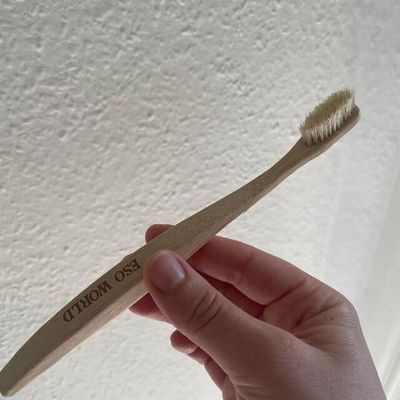
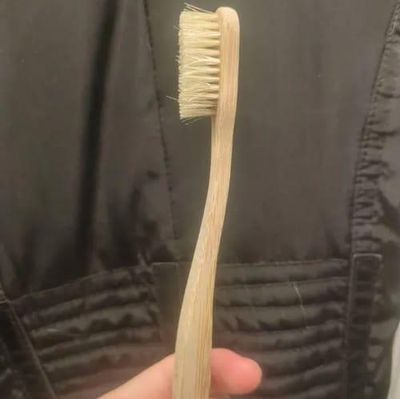
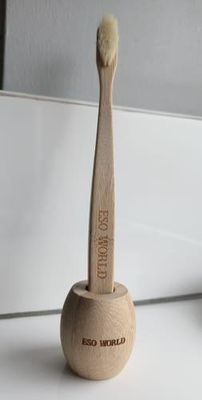
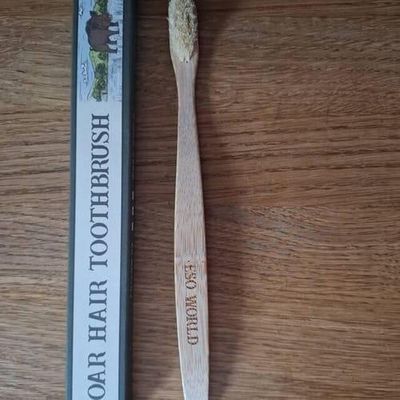
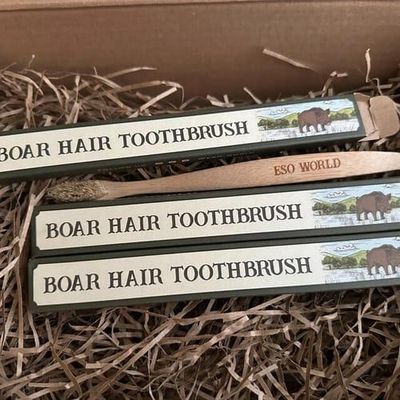
Boar Bristle Toothbrush | Plastic Free product image

Boar Bristle Toothbrush

Eso-FriendlyBest SellerReplace every 2–3 months
3 materials7 excluded96 reviews7 studies

Your mouth is 40–60× more absorbent than your skin. This is the only toothbrush on the UK market built around that — zero adhesive, zero nylon, zero coatings.

$7.00

Choose quantity

Choose quantity
Ships within 24 hours30-day returns

Boar Bristle Toothbrush

$7.00

This is the best brush I have ever had, my new favorite tool. It is beautifully crafted and very sturdy. The bristles cl...Bethany

Zero adhesiveZero plasticZero microplastic shedding

Free from: Nylon-6 bristles, Epoxy resin (BADGE), Polyurethane glue, Hot-melt adhesive (EVA / PUR / SIS) + 3 more

Best for: You’ve tried ‘eco’ bamboo brushes and found out the bristles were still nylon and the bristles were glued in with epoxy, You want to know what’s in the thing that contacts your oral mucosa — the most absorbent tissue in your body — twice a day, You’re switching from plastic and want the simplest first step

Handle

Moso bamboo (Phyllostachys edulis), uncoated

Bristles

Natural boar bristles

Attachment

Pressure-fitted — zero adhesive

Bristle firmness

Soft (equivalent to ADA ‘soft’ rating)

Handle

Moso bamboo — no pesticides, no irrigation required

Bristles

Natural boar bristles

Length

19cm

Weight

~12g

End of life

Fully compostable — handle ~6 months in soil, bristles 12–18 months

What's In It

3 materials. Nothing else.

The Boar Bristle Toothbrush is made from Moso Bamboo, Boar Bristles and Pressure Fit. Every material is published here with its function and percentage.

Pick up any bamboo toothbrush and try to find out what’s holding the bristles in. It won’t be on the packaging. It’s almost never on the product page. The answer, for the vast majority, is epoxy resin, polyurethane, or a hot-melt adhesive — six different petroleum-derived polymers across the industry. The safety data sheets for these adhesives evaluate skin contact and accidental ingestion. But your mouth lining is not skin. The buccal mucosa is 40–60× more permeable (Shojaei, 1998), non-keratinised, with direct vascular access. It’s why nitroglycerin tablets go under your tongue. It’s why sublingual medications work in minutes. And it’s the tissue that contacts your toothbrush adhesive for 2–4 minutes, at 37°C, at pH 6.5–7, twice a day, for years. That exposure profile — chronic, oral mucosal, in conditions that accelerate polymer leaching — has never been the subject of a safety study for any toothbrush adhesive. Our pressure-fitting eliminates all six.

What We Left Out

7 substances we don't use.

The Boar Bristle Toothbrush is free from Nylon-6 bristles, Epoxy resin (BADGE), Polyurethane glue and Hot-melt adhesive (EVA / PUR / SIS) and 3 other substances. Each exclusion is explained below with the reason.

Verified Reviews

4.9

96 verified reviews

5 out of 5 stars

This is the best brush I have ever had, my new favorite tool. It is beautifully crafted and very sturdy. The bristles clean so well and effortlessly, with no need for heavy pressure. It is also very compatible with my natural oil and clay-based toothpaste. The past cleans off so easily. I love how it feels in the hand very sturdy and well-made, thank you for such an awesome product.

B

Bethany

Verified buyer

5 out of 5 stars

They are great. There were a few bristles that fell out but if I'm not mistaken that's common but overall I like them. For improvement, I would say the shipping took quite some time, if there were a quicker shipping time that would be great. Also, thanks for the discount code!

J

Jessica A.

Verified buyer

5 out of 5 stars

the horse hair one I really like but it seems more for gum massage for my preference, it's very soft and easy on the gums, the board hair feels like the sturdiness of the bristles gets a better clean on the teeth but harder on the gums, each has their pros, thank you!

P

Philleen

Verified buyer

5
93%
4
6%
3
1%
2
0%
1
0%
How We Compare

Eso World vs. the alternatives.

 Eso WorldOther EcoConventional
What touches your gumsKeratin protein + bambooNylon-6 + epoxy resin + handle lacquerNylon + adhesive + rubber grip + polypropylene
Bristle adhesiveNone — pressure-fittedEpoxy resin or polyurethane (rarely disclosed)Metal staple + hot-melt adhesive
Bristle materialBoar keratin (natural, tapered tip)Nylon-6 (synthetic, flat-cut cross-section)Nylon-6 or nylon-612
Microplastic sheddingNoneYes — nylon fragments during brushingYes
Handle coatingNone — raw bambooPolyurethane lacquer or paraffin waxN/A (plastic)
Adhesive chemistry disclosedN/A — no adhesive to discloseAlmost neverNever
Fully compostableYes — handle ~6 months, bristles 12–18 monthsHandle only — bristles are plastic (30–40 years)No (500+ years)
Price£7.00£5–£8£2–£4

Based on a review of bamboo toothbrush brands sold in the UK, 2024–25. ‘Other bamboo’ = typical ‘eco-friendly’ bamboo brush with nylon bristles and adhesive attachment. ‘Conventional’ = standard supermarket plastic toothbrush.

Comparison summary: What touches your gums: Eso World uses Keratin protein + bamboo, typical alternatives use Nylon-6 + epoxy resin + handle lacquer. Bristle adhesive: Eso World uses None — pressure-fitted, typical alternatives use Epoxy resin or polyurethane (rarely disclosed). Bristle material: Eso World uses Boar keratin (natural, tapered tip), typical alternatives use Nylon-6 (synthetic, flat-cut cross-section). Microplastic shedding: Eso World uses None, typical alternatives use Yes — nylon fragments during brushing. Handle coating: Eso World uses None — raw bamboo, typical alternatives use Polyurethane lacquer or paraffin wax. Adhesive chemistry disclosed: Eso World uses N/A — no adhesive to disclose, typical alternatives use Almost never. Fully compostable: Eso World uses Yes — handle ~6 months, bristles 12–18 months, typical alternatives use Handle only — bristles are plastic (30–40 years). Price: Eso World uses £7.00, typical alternatives use £5–£8.

How to Use

Getting started.

1

Clear loose fibres first

Run bristles under warm water against your palm for 10 seconds before your first brush. Clears manufacturing fibres. Settles after 1–2 uses.

2

Brush as normal

Any toothpaste, 2 minutes. You’ll naturally press lighter. That’s the bristles working — keratin flexes into the gum margin instead of scraping across it.

3

Stand upright to dry

Bamboo dries best upright in open air. The ‘kun’ bio-agent handles bacteria; you just need to let it breathe. Don’t leave it flat in a puddle or sealed in a case.

4

Compost at end of life

Pull tufts out, compost handle and bristles separately. Handle: ~6 months. Bristles: 12–18 months. Both fully biodegrade.

What to Expect

The first 8–12 weeks.

1

It feels different

Softer than what you’re used to. Nylon is extruded plastic — unnaturally stiff. Boar keratin is protein, like hair. It flexes. You might notice a few loose strands on first use: natural bristles have tapered, variable-thickness tips unlike machine-cut nylon which is perfectly uniform. Run the bristles under warm water against your palm before your first brush. The handle feels warm, not cold. It darkens slightly as it absorbs water. That’s tannin, not mould.

2–4

You stop noticing

The bristles have moulded to your brushing angle. You’re probably pressing lighter than before — that’s fine, your dentist would approve. The brush is just your toothbrush now.

4–8

Settled in

Consistent performance. Some outer bristles may start to splay — same as any brush, natural or synthetic. Handle has darkened a shade or two. Cosmetic only. If you subscribed, your replacement is on its way.

8–12

Time to compost

When bristles splay visibly outward, pull the tufts out with pliers or wiggle them free. Bristles go in the compost (keratin, 12–18 months to decompose). Handle goes in the compost (bamboo, ~6 months). Nothing goes in general waste. Start a new one.

Questions & Answers

17 questions answered.

Most bamboo toothbrushes marketed as eco-friendly still use nylon bristles glued in with epoxy resin — petroleum-derived materials that aren’t disclosed on the packaging. The Eso World Boar Bristle Toothbrush is one of the only toothbrushes in the UK with zero synthetic adhesive, zero nylon, and zero coatings. Every material is published on the product page. Zetner et al. (2005) confirmed natural bristles match nylon for plaque removal. The difference isn’t cleaning — it’s what you’re putting against your oral mucosa twice a day.

The handle is — bamboo composts in 6 months vs 500+ years for polypropylene. But the bristles and adhesive matter more than the handle, because they contact your oral mucosa — tissue that’s 40–60× more permeable than skin (Shojaei, 1998). Most bamboo brushes still use nylon bristles attached with epoxy resin. A bamboo handle with nylon bristles and synthetic glue is a plastic toothbrush with a bamboo handle. Check what’s holding the bristles in.

Yes. Zetner et al. (2005) found equivalent plaque removal in controlled trials. The difference between bristle materials is clinically insignificant — technique and frequency matter more. What IS significant: soft bristles cause far less gum tissue damage (Jain et al., 2019). Gum recession doesn’t reverse.

Most bamboo toothbrushes contain: nylon-6 bristles (a synthetic polymer), epoxy resin or polyurethane adhesive (petroleum-derived, contains bisphenol derivatives), and polyurethane lacquer or paraffin wax on the handle. These materials are almost never disclosed on the packaging or product page. The safety data sheets for these adhesives evaluate skin contact — not the chronic oral mucosal exposure that brushing involves. The Eso World toothbrush eliminates all six adhesive chemistries and uses only bamboo, boar keratin, and mechanical compression.

Friction. The tufts are compressed into holes slightly smaller than they are. The bamboo grips them mechanically. Hold strength matches or exceeds adhesive attachment in testing. If a tuft loosened (rare), it would come out as a visible clump — not as invisible chemical leaching over months.

Your oral mucosa is 40–60× more permeable than your skin (Shojaei, 1998). It’s why medications work under the tongue in minutes. Anything that dissolves or leaches during brushing — adhesive residue, nylon fragments, coating chemicals — absorbs through that tissue and enters your bloodstream directly, bypassing the liver.

Epoxy resin (contains BADGE), polyurethane, and four hot-melt types: EVA (ethylene-vinyl acetate), polyamide, PUR (reactive polyurethane), and SIS (styrene-isoprene-styrene). All petroleum-derived. All used in the bamboo toothbrush industry. None tested for chronic oral mucosal exposure.

Sometimes a few. Boar bristles taper naturally — each one gets thinner toward the tip, with slight variation in thickness. Nylon is machine-extruded, perfectly uniform. The loose fibres settle after one or two brushes. Rinse against your palm before first use.

Every 2–3 months. Same as any toothbrush. When bristles splay outward, it’s time. They soften gradually over their life — that’s keratin, not a defect.

We tested every alternative. Castor oil nylon is still nylon — synthetic, non-biodegradable, same microplastic shedding. Bamboo fibre is too soft to clean effectively. Charcoal-infused nylon is nylon with marketing. Boar keratin is the only natural bristle that’s biodegradable, effective, and not a synthetic polymer. If a genuine plant-based bristle emerges, we’ll switch.

No. Boar bristles are an animal product. A plant-based bristle that’s biodegradable, effective, and not a synthetic polymer doesn’t exist yet. If one emerges, we’ll switch.

Bamboo contains the bio-agent ‘kun’ which inhibits bacterial and fungal growth (Afrin et al., 2012). Stand it upright, let it air dry. The handle darkens over weeks — that’s tannin oxidation, not mould. We leave it uncoated so it dries faster than lacquered bamboo.

The coatings are petroleum-derived. Polyurethane lacquer or paraffin wax — both create a plastic film against your lips and seal in bamboo’s natural antimicrobial properties. The handle darkens. We’d rather that than a petroleum derivative on a product built to avoid them.

Yes. Pull the bristle tufts out, compost everything separately. Bamboo handle: ~6 months. Keratin bristles: 12–18 months. Both fully biodegrade. Nothing goes in general waste.

Roughly the same as a mid-range Oral-B. Less than most ‘eco’ bamboo brands that still use nylon and glue — and those still have adhesive. Current price is on the page above. Subscribe for 20% off.

We make a kids version — smaller head, shorter handle, same pressure-fitted construction. Boar bristles, zero adhesive. Ages 3+.

Whatever your dentist recommends. Keratin is chemically inert. It won’t react with any toothpaste formulation.

The bottom line

The Boar Bristle Toothbrush is made from Moso Bamboo, Boar Bristles, Pressure Fit. Free from Nylon-6 bristles, Epoxy resin (BADGE), Polyurethane glue. Every material is published on this page with the research behind each choice. 96 verified buyers rate it 4.9/5.

3 materials — nothing else7 substances excluded96 verified reviews — 4.9/57 cited studies
Shipping calculated at checkout
30-day returns
Every material published

Shojaei AH (1998)

Journal of Pharmacy & Pharmaceutical Sciences

The buccal mucosa is 40–60× more permeable than skin. Its thin, non-keratinised epithelium and rich capillary network allow substances to bypass first-pass liver metabolism and enter systemic circulation directly. This is the foundational reason oral mucosal exposure matters more than skin contact for the same chemical.

Olea N, Pulgar R, Pérez P, et al. (1996)

Environmental Health Perspectives

Bisphenol-A leaches from dental sealants and composite resins into saliva within hours of application. Warmth, moisture, and mild acidity — the exact conditions during brushing — accelerate leaching from polymer-based materials. The oral environment is not inert.

Jain T, Pundir S, Garg R (2019)

Journal of Conservative Dentistry

Soft-bristled toothbrushes achieved comparable plaque removal to medium-bristled brushes with significantly less gingival abrasion. The cleaning difference between soft and medium is clinically insignificant. The tissue damage difference is not. Gum recession, once it starts, does not reverse.

Zetner K, Anthenill L, Schmid H (2005)

Schweizer Archiv für Tierheilkunde

Natural bristle toothbrushes produced equivalent plaque removal to synthetic bristles in controlled brushing trials. Bristle material matters less than technique and frequency. The question isn’t whether natural cleans as well — it does. The question is what else is in the brush.

Afrin T, Tsuzuki T, Kanwar RK, Wang X (2012)

Journal of Textile Science & Engineering

Bamboo fibre contains the antimicrobial bio-agent ‘kun’ which inhibits bacterial growth without any chemical treatment. The property is inherent to the raw material and is retained when the bamboo is uncoated. Coating bamboo with lacquer or wax seals this agent in.

Napper IE, Thompson RC (2016)

Marine Pollution Bulletin

Synthetic polymer fibres, including nylon-6 (the standard material in toothbrush bristles), shed microplastic particles during mechanical action. Natural keratin fibres do not. The difference is structural: extruded polymers fragment; protein fibres decompose biologically.

Rochester JR, Bolden AL (2015)

Environmental Health Perspectives

BPA substitutes BPS and BPF match the body’s own estrogen at membrane receptors via a non-genomic pathway that regulatory testing doesn’t assess. The ‘BPA-free’ label solved a consumer perception problem, not a biological one. Relevant here because epoxy resin adhesives can contain bisphenol derivatives.

Read our research →

This is a toothbrush, not a medical device. Brush twice daily and see your dentist regularly.