
The 'gum base' on chewing gum's label is up to 46 synthetic substances under one regulated term. This is one ingredient — Chios PDO mastiha, chewed for 2,500 years.. 100% Chios PDO mastiha. No synthetic gum base, no plasticisers, no BHT. The tree resin people have been chewing for 2,500 years.. Made from Chios PDO Mastiha (Pistacia lentiscus var. chia). Free from Synthetic gum base (polyisobutylene, polyvinyl acetate), BHT (butylated hydroxytoluene), Plasticisers (glycerol esters, softeners), Aspartame, sucralose, acesulfame K, Titanium dioxide (E171). Pick up any major chewing-gum brand and read the ingredients. The first thing on the list is 'gum base'. $50.00 — ships internationally from the UK.


Kreto Mastic Gum

The 'gum base' on chewing gum's label is up to 46 synthetic substances under one regulated term. This is one ingredient — Chios PDO mastiha, chewed for 2,500 years.
Keep refrigerated — Mastiha degrades at room temperature. Store the tin in the fridge between sessions to keep the resin firm and the terpene flavour intact.
Choose your pack
Kreto Mastic Gum
|$44.00for 2Kreto Mastic Gum × 2
$44.00
Subscribe — never run out, cancel anytime
Pause, skip, or cancel anytime.
$44.00 every 2 months · $22.00/month
Best for:
- — Anyone uncomfortable with chewing petroleum-derived polymer for 20–30 minutes a session
- — People who've read the ingredient list on Wrigley's or Trident and put it back
- — Travellers who want something shelf-stable without artificial preservatives

12 questions answered.
Mastiha is the dried resin of a small evergreen tree, Pistacia lentiscus var. chia. The tree only produces commercially viable resin when grown in the southern half of Chios, a Greek island in the Aegean — the combination of soil, altitude, and microclimate is what gives mastiha its distinctive composition. Growers score the bark in summer; resin oozes out and sun-dries on the ground for about 15 days; it's then collected by hand, cleaned, and graded. The word 'gum' originally referred to plant resins like this one. Modern chewing gum is named after mastiha but isn't made of mastiha — it's made of synthetic polymers chosen for chew-feel and shelf life.
Chemically different. The ingredient on the label is 'mastiha' — one thing, no base polymer, no plasticisers, no antioxidants, no sweeteners, no coatings. Modern commercial gum is up to 46% synthetic polymer (polyisobutylene + polyvinyl acetate), plus softeners, plus stabilisers, plus colour, plus sweetener. The two products look similar at a glance because they perform a similar function (something to chew), but the actual substance is different in the same way a wool jumper and a polyester fleece are both jumpers but not the same material.
Pine-resin and cedar, faintly bitter for the first 30 seconds, settling into a clean almost-sweet finish over 5–10 minutes. Closer to chewing on a sprig of rosemary than chewing on Wrigley's. People expecting a fruit or mint flavour are usually surprised — mastiha tastes like its source material, which is a tree.
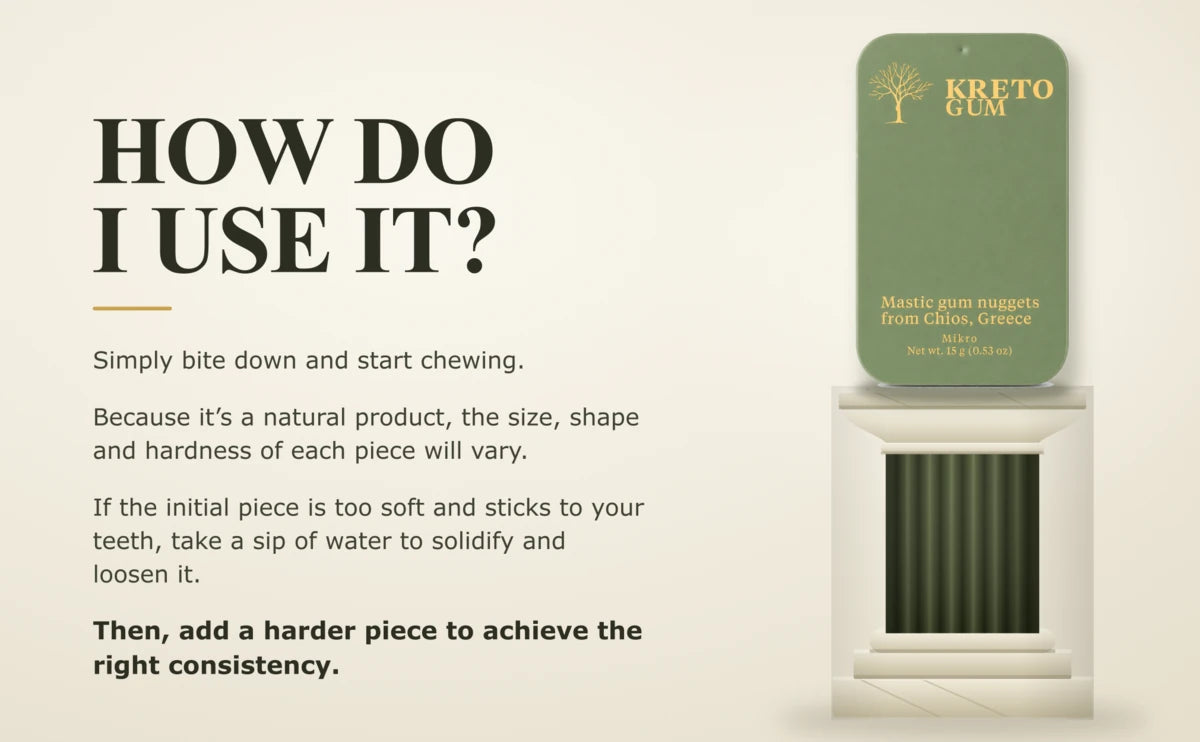
Start with 1–2 tears. Hold them in your cheek for 30–60 seconds to warm up; they'll soften enough to chew. The first minute is the hardest — once the resin reaches body temperature it becomes elastic and chewable like normal gum. A 15g tin lasts most people 1–2 weeks of regular chewing (one session of ~30 min per day).
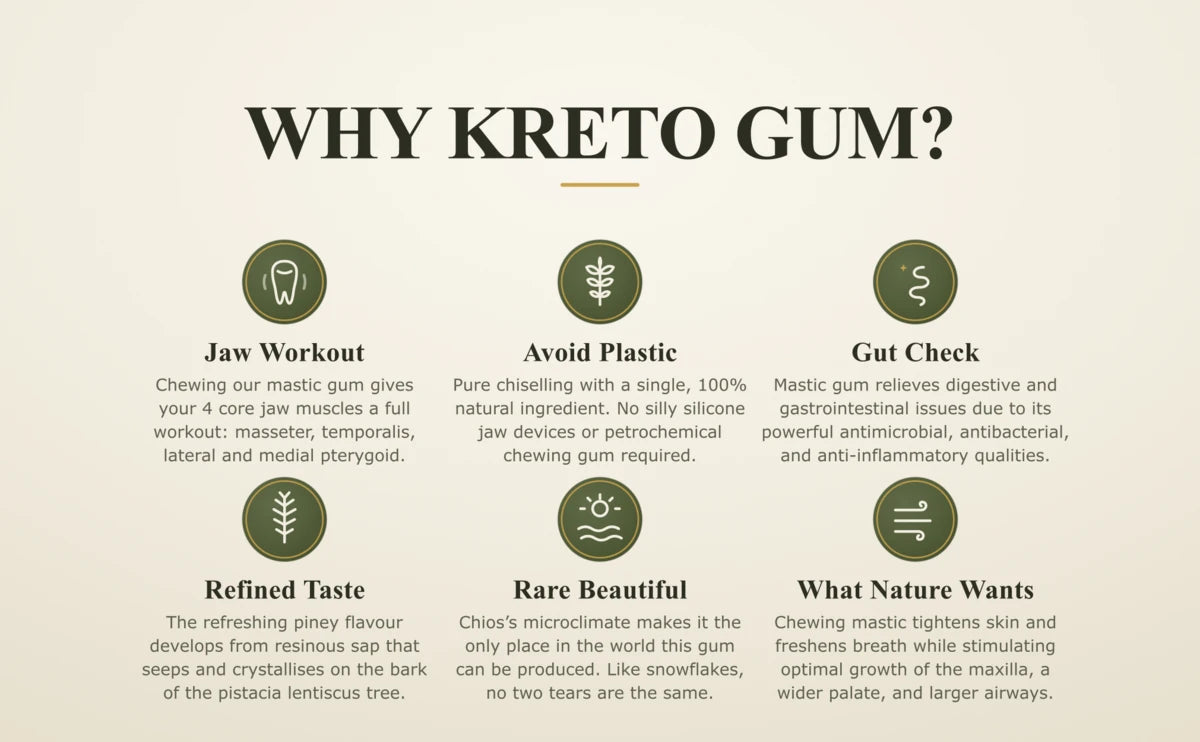
Four published studies are linked at the bottom of the page. Two found that mastiha suppresses Helicobacter pylori in vitro and in small human trials (Huwez et al. 1998 in the New England Journal of Medicine; Marone et al. 2001 in the Journal of Chemotherapy). One found reduced dental plaque and salivary bacteria after chewing (Aksoy et al. 2007, Archives of Oral Biology). One characterised the natural antioxidant profile of the resin (Paraskevopoulou et al. 2007). These are real effects in published research; whether they translate to noticeable benefit at typical consumption levels is between you and your GP. We're not making medical claims.
Mastiha is a chewable resin — same physical hazard category as standard gum (don't swallow whole; choking risk for under-3s applies). Chemically it's substantially fewer ingredients than commercial gum. If your child is old enough to chew commercial gum, mastiha is a chemically simpler alternative. The bitter-at-first taste means most kids reject it on first try — which is honest feedback about the flavour profile, not a safety issue.
Three reasons. (1) Mastiha is harvested by hand from trees that only grow on one island — supply is constrained by the geography of the tree's habitat, not by branding. (2) The first batch (4kg of bulk resin, ≈266 finished tins) cost us £4.53/tin in landed cost, post-shipping and UK import VAT — the unit economics of natural resin from a Greek island can't match the unit economics of an industrial polymer made by the tonne. (3) We've chosen not to dilute with cheaper materials (no synthetic base, no sweetener bulking) — what's in the tin is the actual substance the label names.
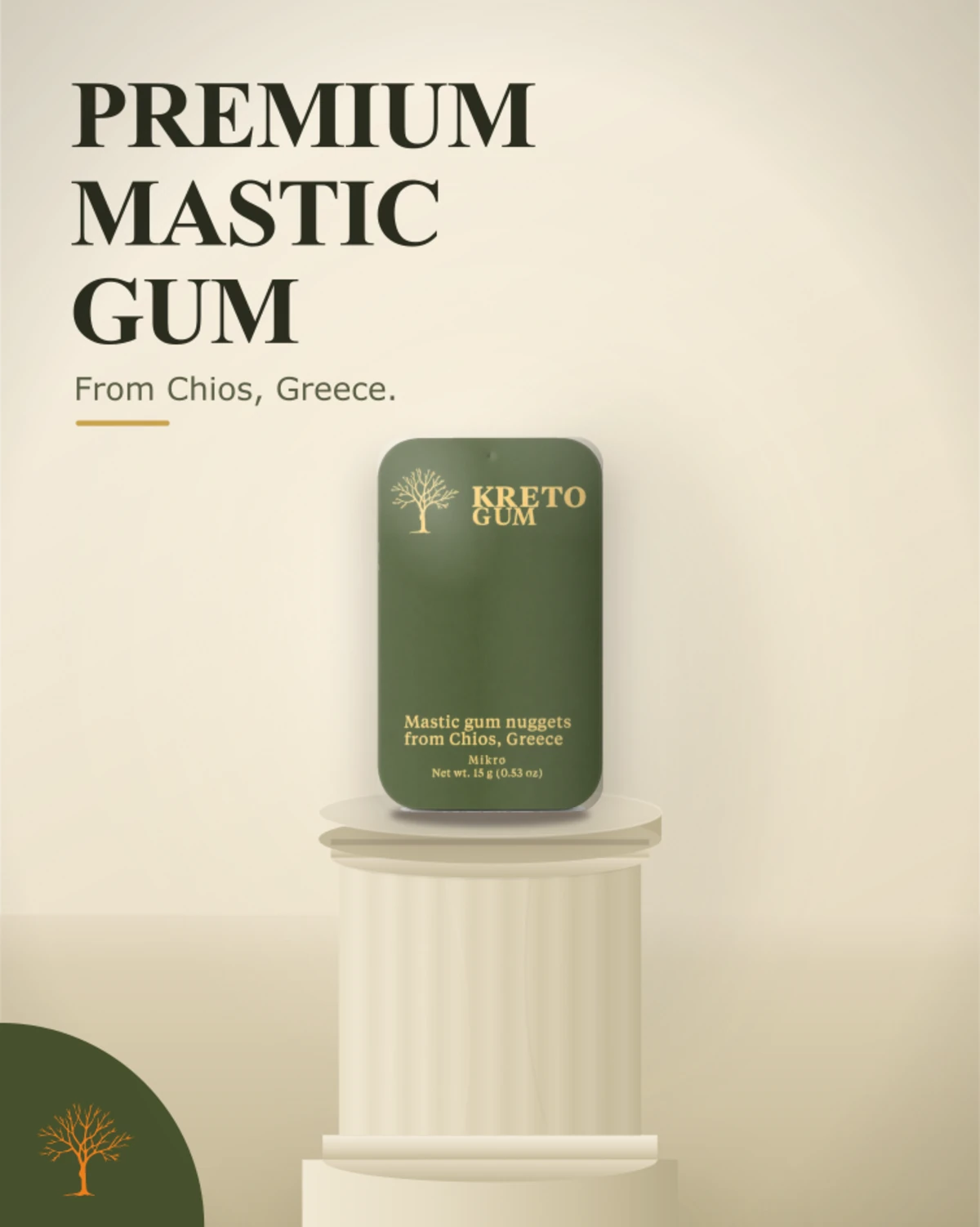
15g per tin, ≈10 tears, ≈one tear per chewing session. Most users get 10–14 sessions per tin, which works out to 1–2 weeks of daily chewing. The tin is rigid steel — won't deform in a pocket, easy to throw in a bag.
Chios mastiha is graded by tear size and cleanliness. LARGE is the premium harvest — bigger individual tears, less surface dust, cleaner colour. There are smaller grades (medium, fine, dust) that go into pharmaceutical and food-ingredient supply; LARGE goes into retail products like this one. Same plant, same harvest method, just the top of the size sort.
Mastiha is plant resin — no animal product involved at any stage of growing, harvesting, or processing. We haven't paid for a Vegan Society audit because the ingredient list is a single botanical substance and the answer is mechanically obvious. If you need a Vegan Society logo for certification reasons, this product doesn't carry one.
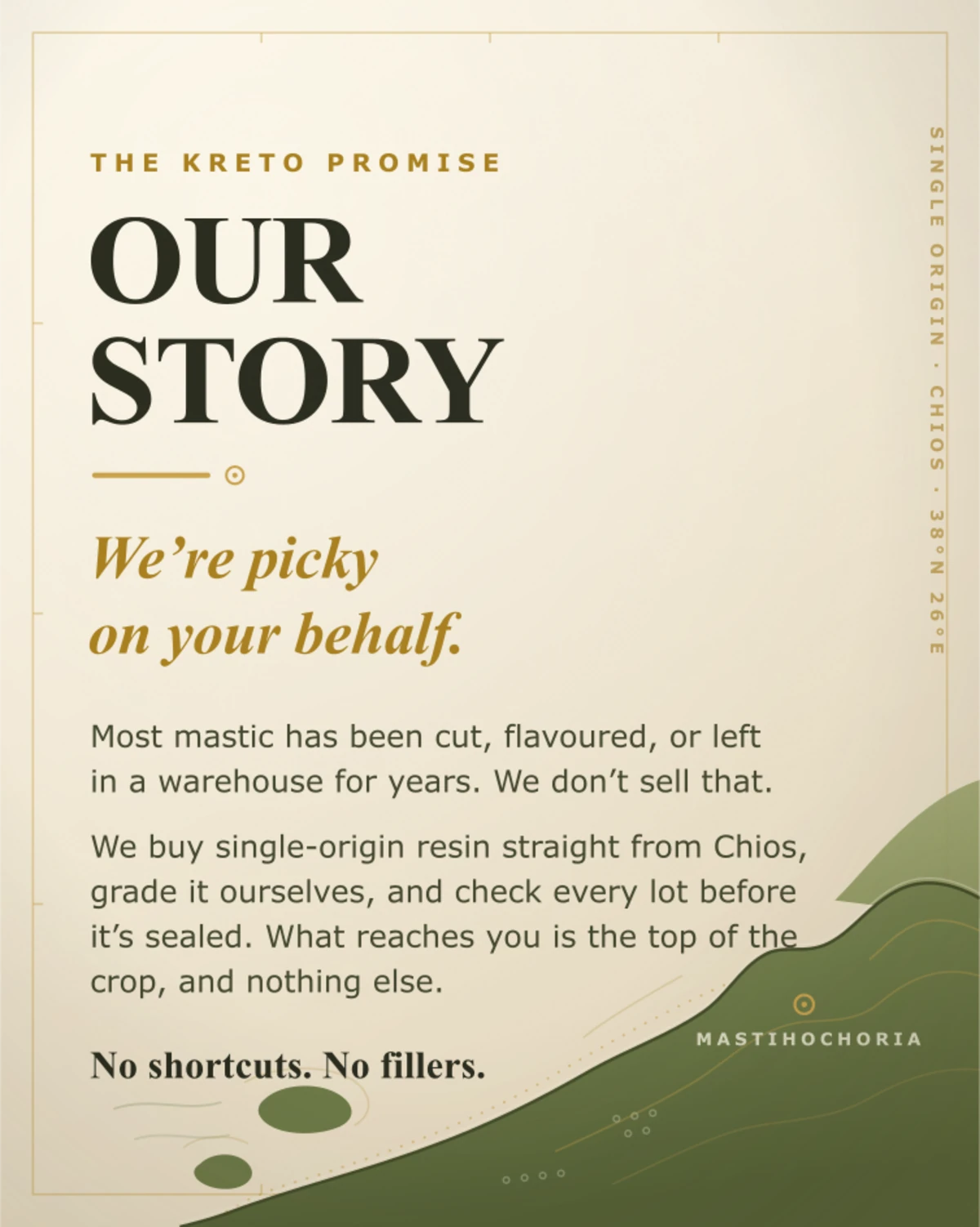
Kreto Gum is the brand that makes this product. Kreto sources the mastiha direct from the Chios Mastiha Growers Association (the Greek cooperative that holds the PDO designation) and packs it into the printed steel tins. We list it here because it's the only chewable we know of where every material on the label is the actual substance the label names — same editorial bar as the rest of the catalogue. The Kreto storefront will launch separately later this year.
Probably — mastiha is widely available on Amazon UK from Greek importers, typically £8–18 per 10–25g across multiple brands. Most are good products; the cheapest ones are 'small' or 'medium' grade (smaller tears, more surface dust) rather than LARGE. We've priced the 1pk at £18 because (a) that's our actual landed cost plus a sustainable margin for both Kreto and Eso, and (b) the multipack discount (£16/tin at qty 2, £14/tin at qty 4) brings the per-tin price down to category-competitive territory if you commit to a small bulk buy.
The bottom line
The Kreto Mastic Gum is made from Chios PDO Mastiha (Pistacia lentiscus var. chia). Free from Synthetic gum base (polyisobutylene, polyvinyl acetate), BHT (butylated hydroxytoluene), Plasticisers (glycerol esters, softeners). Every material is published on this page with the research behind each choice.
Huwez FU, Thirlwell D, Cockayne A, Ala'Aldeen DAA (1998)
New England Journal of Medicine
In a small randomised trial in Iraqi patients with duodenal ulcers, 1g/day of mastic gum for two weeks suppressed Helicobacter pylori activity in 7 of 9 treated patients vs 0 of 7 placebo patients. The mechanism was attributed to mastiha's terpene composition — a class of antimicrobial phytochemicals naturally present in the resin.
Marone P, Bono L, Leone E, Bona S, Carretto E, Perversi L (2001)
Journal of Chemotherapy
Mastiha extracts demonstrated antimicrobial activity against multiple clinically isolated Helicobacter pylori strains in vitro, including strains resistant to standard antibiotic regimens. Minimum inhibitory concentrations ranged 125–500 μg/mL across tested strains.
Aksoy A, Duran N, Toroglu S, Koksal F (2007)
Archives of Oral Biology
In a controlled human trial, chewing mastic gum for 15 minutes after meals reduced total bacterial count in saliva and dental plaque vs an untreated control group. The effect persisted for hours after chewing ended, suggesting a residual antimicrobial action distinct from mechanical removal.
Paraskevopoulou A, Kiosseoglou V, Pegiadou S, Schmidt SD (2007)
Journal of Agricultural and Food Chemistry
Chios mastiha resin contains a complex profile of natural antioxidants — alpha- and beta-pinene, linalool, myrcene, and a series of triterpenic acids — explaining the resin's natural shelf-stability without need for added preservatives like BHT.
Triantafyllidi A, Xanthos T, Papalois A, Triantafillidis JK (2015)
Annals of Gastroenterology
Review of clinical evidence for mastiha in inflammatory conditions of the gastrointestinal tract found consistent anti-inflammatory and antimicrobial effects in vitro and in animal models, with limited but positive human trial data for peptic ulcer disease and inflammatory bowel disease.
Related reading
Microplastics: What Industrial Polymers Shed
Why chewing a synthetic polymer for 20–30 minutes a session against the most absorbent skin in your body is a different exposure category from chewing tree resin.
Phthalates and Plasticiser Chemistry
Why softeners get added to base polymers in the first place — and why mastiha doesn't need any.
Endocrine Disruptors: The Mechanism
Endocrine disruption isn't a substance — it's a mechanism. Where the modern-gum ingredient list intersects with that mechanism, and where it doesn't.
Fragrance: 3,000+ Substances on a One-Word Label
Same regulatory pattern as 'gum base' — a single label term covering up to 46 different substances, with no obligation to specify which.
What Eso-Friendly Actually Means
Why this product is on the Eso catalogue. Same editorial standard as everything else: every material checked, every exclusion explained, every claim cited.
Complete your routine


This is a food product, not a medical device. The research citations on this page report observed effects from published studies; they are not claims about what this product will do for you. If you have a known medical condition or are taking medication, consult your GP before adding any new chewable.