5 out of 5 stars
“I had an issue with my delivery and Vincent gave me a no-quibble refund on the postage I had had to pay - very positive and was very impressed. Charcoal sticks also very good :)”
M
Mel
Verified buyer

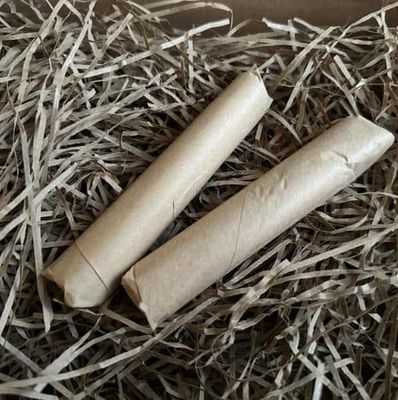
UK tap water is chlorinated. Drop a charcoal stick in a jug — chlorine, VOCs, and heavy metals adsorbed overnight. No plastic cartridges, compostable at end of life.. Natural activated charcoal water filter. Made from Binchotan Charcoal. Free from Plastic cartridges, Ion-exchange resin beads, Silver nanoparticles, Binder-bound carbon blocks, Plastic filter pitchers. UK tap water legally contains residual chlorine, chloramine, and trace amounts of pharmaceutical compounds. Activated carbon is the most effective single-material filter for reducing chlorine and VOCs — the EPA lists it as the primary treatment for taste and odour complaints. 3 verified customer reviews, 5/5 average. £18.00 with free UK shipping.


UK tap water is chlorinated. Drop a charcoal stick in a jug — chlorine, VOCs, and heavy metals adsorbed overnight. No plastic cartridges, compostable at end of life.
Quantity
$18.00
Natural Charcoal Water Filter Stick
|$18.00Natural Charcoal Water Filter Stick
$18.00
“I had an issue with my delivery and Vincent gave me a no-quibble refund on the postage I had had to pay - very positive...” — Mel
Free from: Plastic cartridges, Ion-exchange resin beads, Silver nanoparticles, Binder-bound carbon blocks + 1 more
Best for: Your tap water tastes of chlorine, You’re tired of replacing plastic Brita cartridges, You want the simplest possible water filter
Binchotan (white charcoal)
2 sticks
6–12 months each
1L jug per stick
Compostable
The Natural Charcoal Water Filter Stick is made from Binchotan Charcoal. Every material is published here with its function and percentage.
UK tap water legally contains residual chlorine, chloramine, and trace amounts of pharmaceutical compounds. Activated carbon is the most effective single-material filter for reducing chlorine and VOCs — the EPA lists it as the primary treatment for taste and odour complaints.
The Natural Charcoal Water Filter Stick is free from Plastic cartridges, Ion-exchange resin beads, Silver nanoparticles and Binder-bound carbon blocks and 1 other substances. Each exclusion is explained below with the reason.
Verified Reviews
3 verified reviews
“I had an issue with my delivery and Vincent gave me a no-quibble refund on the postage I had had to pay - very positive and was very impressed. Charcoal sticks also very good :)”
Mel
Verified buyer
“Great quality, nicely packaged. Vincent reach out shortly after my order arrived to check everything was in order. Would recommend!”
Tommy
Verified buyer
“My water doesn’t taste like iron because of this”
Noémi
Verified buyer
| Eso World | Typical | |
|---|---|---|
| Filter material | Binchotan activated charcoal | Plastic cartridge with carbon granules |
| Plastic waste | Zero — stick is compostable | New cartridge every 1–2 months |
| Removes chlorine | Yes | Yes |
| Electricity needed | No | Some models |
| Lifespan | 6–12 months per stick | 1–2 months per cartridge |
Comparison summary: Filter material: Eso World uses Binchotan activated charcoal, typical alternatives use Plastic cartridge with carbon granules. Plastic waste: Eso World uses Zero — stick is compostable, typical alternatives use New cartridge every 1–2 months. Removes chlorine: Eso World uses yes, typical alternatives use yes. Electricity needed: Eso World uses no, typical alternatives use Some models. Lifespan: Eso World uses 6–12 months per stick, typical alternatives use 1–2 months per cartridge.
Boil the stick for 10 minutes before first use
This opens the carbon pores and sterilises the surface. Only needed once at the start.
Drop it in a jug of tap water
One stick per litre. Leave it in — it works continuously.
Wait 1–2 hours (or overnight)
The charcoal adsorbs chlorine and impurities over time. Overnight gives the best results.
Refill as you drink
Just top up the jug with tap water. The stick keeps working.
Re-boil every 2–3 months
A 10-minute boil refreshes the pores and extends the stick’s life. Replace after 6–12 months total.
Chlorine taste gone
After the first overnight soak, the chlorine taste is noticeably reduced or eliminated. This is the most immediate difference — water tastes cleaner and smoother.
Peak performance
The charcoal is at full capacity. Chlorine, some VOCs, and organic compounds are being adsorbed effectively. You’ll probably stop buying bottled water around now.
Time to re-boil
The pores are starting to saturate. Boil the stick for 10 minutes to refresh it. This extends its useful life significantly.
Replace
The stick has reached capacity. If the chlorine taste returns after boiling, it’s done. Compost it — it’s pure charcoal, nothing else.
Depends on what you want to remove. For chlorine taste and VOCs, activated charcoal (binchotan) is the simplest and most sustainable option — no plastic cartridges, no electricity, compostable at end of life. For heavy metals and full purification, a distiller with carbon post-filter is more thorough. Brita-style pitchers use plastic cartridges with ion-exchange resin — a new one every month, billions to landfill annually.
Drop the stick into a jug or bottle of tap water. Wait 1–2 hours (or overnight). The charcoal adsorbs impurities. Refill as you drink.
After about 6 months of daily use, the pores become saturated. If you notice the chlorine taste returning, it’s time. Boiling the stick in water for 10 minutes every 2–3 months extends its life.
Yes. Cut or break a stick to fit. Works in any container.
Fluoride, bacteria, and dissolved minerals. It’s a carbon filter — great for chlorine and taste, but not a full purifier.
The bottom line
The Natural Charcoal Water Filter Stick is made from Binchotan Charcoal. Free from Plastic cartridges, Ion-exchange resin beads, Silver nanoparticles. Every material is published on this page with the research behind each choice. 3 verified buyers rate it 5/5.
US Environmental Protection Agency (2023)
Drinking Water Treatment Technology
Granular activated carbon is the primary recommended treatment for chlorine, chloramine, taste, odour, and volatile organic compounds in drinking water. Its micropore structure physically adsorbs these contaminants with no chemical reaction and no addition of residues to the water.
Devi R, Dahiya RP (2008)
Desalination
Coconut shell and Japanese white charcoal (binchotan) have superior micropore volume for adsorbing small volatile organic molecules compared to other carbon sources. Their micropore structure is naturally suited to capturing compounds with molecular weights between 50–200 g/mol — the range of most VOCs found in treated tap water.
Hsieh CT, Teng H (2000)
Carbon
Activated charcoal removes up to 99% of free chlorine from tap water at typical domestic contact times. The reaction converts chlorine to harmless chloride ions via surface catalysis on the carbon — the chlorine is broken down, not just trapped. This is the mechanism by which a charcoal stick eliminates the chlorine taste that triggers most UK consumer complaints about tap water.
5
3 verified reviews
My water doesn’t taste like iron because of this
Great quality, nicely packaged. Vincent reach out shortly after my order arrived to check everything was in order. Would recommend!
I had an issue with my delivery and Vincent gave me a no-quibble refund on the postage I had had to pay - very positive and was very impressed. Charcoal sticks also very good :)
This is a water filter, not a medical device. It reduces chlorine and organic compounds; it does not remove fluoride or pathogens.